Switch Mode Power Supplies: A UK Ham Radio Guide
Switch mode power supplies are lighter, cooler and more efficient than linear units, but their high-frequency switching can inject birdies and hash across the HF bands. This UK guide explains how an SMPS works, why it can cause interference on 40m and 80m, and how Noise Offset Control moves that noise off the frequencies you actually operate on.
What Are Switch Mode Power Supplies?
Switch mode power supplies convert AC mains voltage to regulated DC output by rapidly switching transistors on and off — typically at frequencies between 50kHz and 500kHz. That's the short version. The longer explanation involves high-frequency transformers, pulse-width modulation, and feedback loops, but honestly, what matters to most of us is the end result: a lighter, more efficient, and cooler-running power supply than the old linear designs.
Older linear units are superbly built, but they weigh about as much as a bag of cement, which makes them awkward on a crowded workbench or in a small city shack. A modern switch mode power supply gives roughly half the weight for the same output, with far less heat pouring off the back.
Key fact: A typical 13.8V 30A switch mode power supply weighs 1.5–2.5kg, compared to 8–12kg for an equivalent linear unit. Efficiency sits at 85–92% for SMPS versus 40–55% for linear designs.
The basic principle hasn't changed much since the 1970s, but the components have. Modern MOSFETs, better capacitors, and smarter control ICs mean today's switching PSUs are quieter, more stable, and far more reliable than the early designs that gave SMPS a bad reputation among radio enthusiasts. (If you used one of those early units, you'll know exactly what I mean — they were genuinely awful.)
Switch Mode Power Supplies vs Linear: The Real Differences
This is where the debate gets heated — especially in ham radio circles. Linear power supplies regulate voltage by dissipating excess energy as heat through a series pass transistor. Simple, effective, and inherently low-noise. But that simplicity comes at a cost: massive transformers, poor efficiency, and serious weight.
Switching power supplies do the same job differently. They chop the input voltage at high frequency, step it down through a small transformer, then smooth and regulate the output. The result? Less wasted energy, smaller components, and dramatically reduced weight.
So what's the catch?
Noise. That high-frequency switching generates electromagnetic interference. For someone running a bench light or charging batteries, it's irrelevant. For a ham radio operator trying to pull weak signals out of the HF bands? It can be a real problem. Well, actually — it used to be a real problem. Modern designs have largely sorted this, which I'll cover in the noise section below.
| Specification | Switch Mode PSU | 30A Linear Power Supply 13.8V |
|---|---|---|
| Typical weight | 1.5–2.5kg | 8–12kg |
| Efficiency | 85–92% | 40–55% |
| Heat output at full load | 15–30W wasted | 180–250W wasted |
| Ripple voltage (typical) | 30–80mV p-p | 5–15mV p-p |
| RF noise floor | Good (with NOC) | Excellent |
| Size (approx.) | 200×100×60mm | 250×180×130mm |
| Price range (UK, 2026) | £55–£130 | £150–£350 |
| Cooling | Fan (variable speed) | Passive/convection |
For a deeper technical breakdown, see our separate guide on linear vs switching power supply performance for radio use, which covers oscilloscope measurements and on-air comparisons.
Why 13.8V 30A Is the Standard for Ham Radio Power Supplies
The 13.8V figure isn't arbitrary. It matches the nominal voltage of a fully charged 12V lead-acid battery under float charge — which is exactly what most mobile radio equipment was originally designed to run from. Every major transceiver manufacturer (Icom, Yaesu, Kenwood) specs their base station radios for 13.8V DC nominal input.
The 30A rating gives headroom. A 100W HF transceiver draws roughly 20–22A on transmit. You want at least 25% headroom above peak draw to avoid voltage sag and to keep the PSU running within its comfort zone. A 13.8V 30A bench power supply handles this perfectly.
Regulated Output: Why ±0.1V Matters
A properly regulated 13.8V DC power supply for radio holds output within ±0.1V from no load to full load. That stability matters because transceivers can behave unpredictably with voltage fluctuations: reduced output power, distorted audio, or even protection-circuit trips. It is common to hear of a rig shutting down mid-QSO because a cheap unregulated supply sagged to 11.9V under key-down.
The best bench PSU 13.8V 30A units available in the UK this spring maintain regulation within ±0.05V, which is spot on for demanding applications. Look for units with both voltage and current metering on the front panel — you'll want to see exactly what's happening during transmit.
Noise, Interference, and the Low Noise Switching Power Supply Revolution
Here is where things have genuinely changed. Not long ago, the standard advice for anyone running HF was to stick with linear. Not anymore.
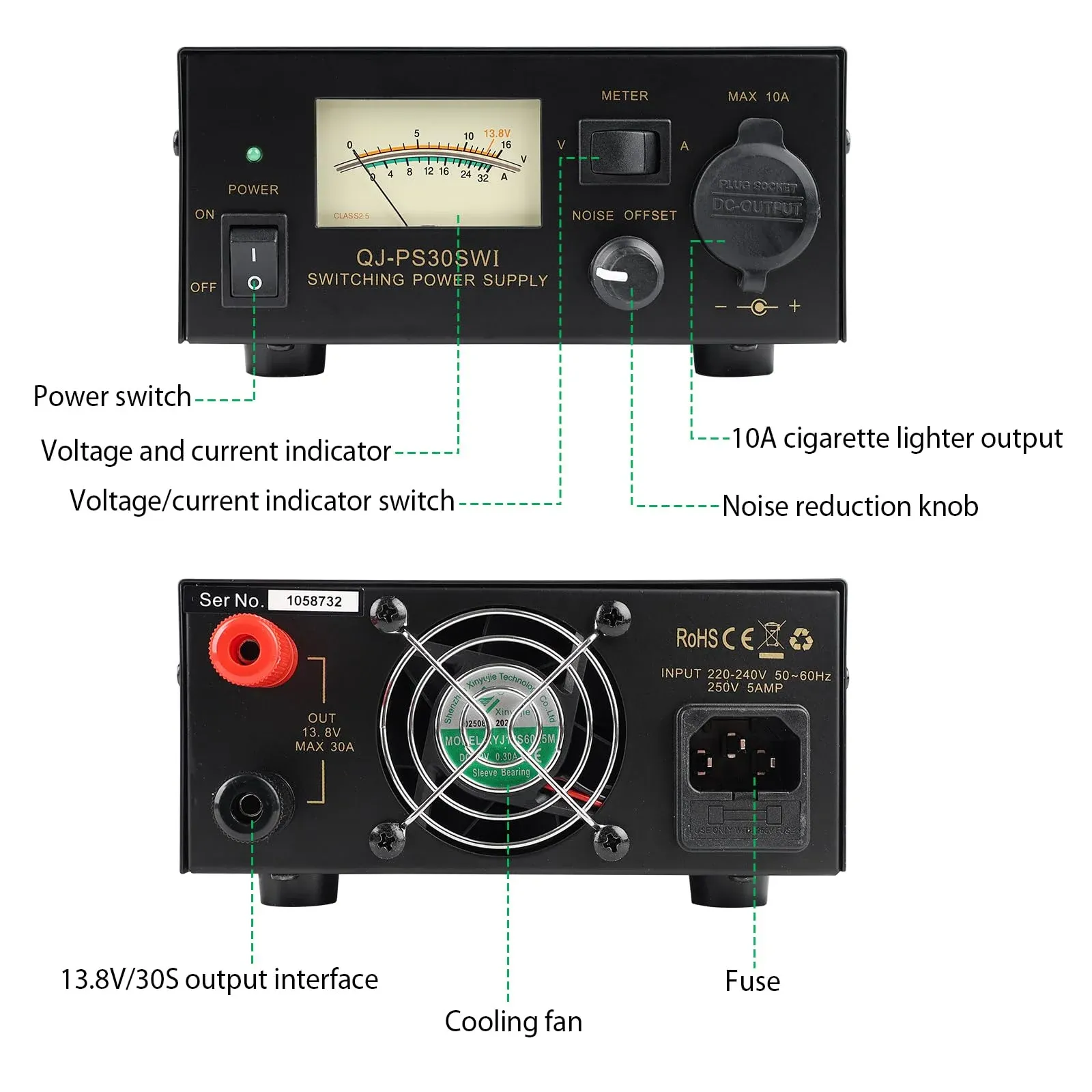
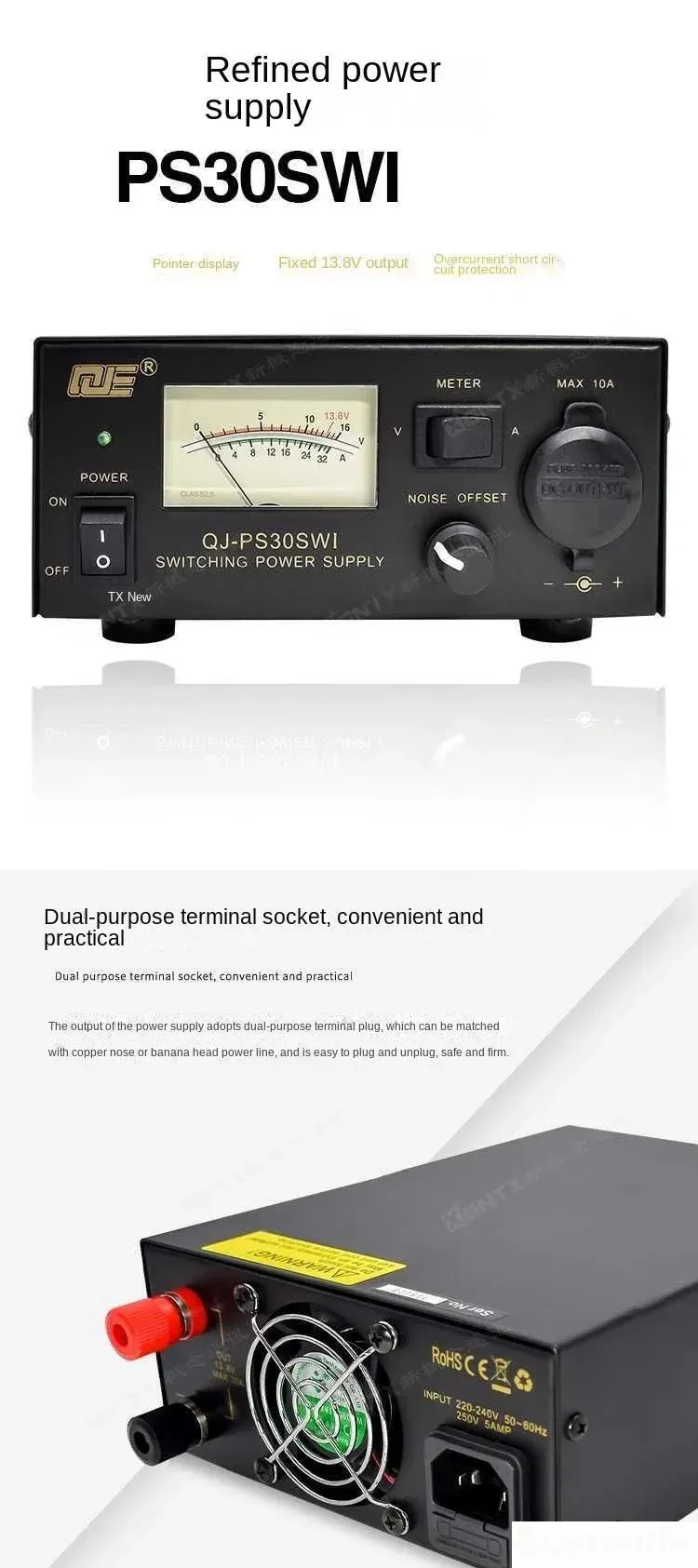
Modern low noise switching power supply designs incorporate what manufacturers call Noise Offset Control (NOC). This clever bit of engineering shifts the switching frequency and its harmonics away from the amateur bands you're actually using. The result? Noise floors comparable to linear supplies on the bands that matter to you.
Noise Offset Control (NOC): Adjusts the primary switching frequency in real-time to move harmonic spurs away from HF, VHF, and UHF amateur allocations. Typical noise reduction: 20–40dB on affected frequencies.
UK operators comparing a ham radio power supply 13.8V unit with NOC against an older linear supply on 40m and 20m regularly report they cannot tell the difference on the waterfall display, with the noise floor within a decibel or two, which is remarkable for a unit weighing under 2kg.
That said, not all switching supplies are equal. Budget units without proper filtering or shielding can still spray interference across the HF spectrum. If you're buying a bench power supply for ham radio UK, check specifically for:
- NOC or equivalent frequency-shifting technology
- Internal EMI filtering on both input and output
- Shielded enclosure with proper grounding points
- CE and UKCA marking — these confirm EMC compliance per UK electromagnetic compatibility regulations
For more on choosing between compact and linear units specifically for amateur radio, see our linear vs switching PSU comparison for ham operators.
Buying Guide: Switch Mode Power Supplies for the UK Market in 2026
Right, let's get practical. What should you actually look for when buying a DC bench power supply UK in 2026? I've narrowed it down to the factors that genuinely matter — not marketing fluff.
Output Voltage and Current
For ham radio: 13.8V 30A is the sweet spot. For general bench work, a variable output (0–30V, 0–10A) gives more flexibility but won't handle high-current radio work. Know your primary use case before buying.
Protection Features
Non-negotiable. Every decent 13.8V regulated power supply UK should include:
- Over-voltage protection (OVP) — typically trips at 15.5–16V
- Over-current protection (OCP) — foldback or hiccup mode
- Short-circuit protection — must be automatic recovery
- Over-temperature protection — shuts down before damage occurs
These aren't optional extras. They protect both your supply and whatever expensive equipment sits downstream. The HSE electrical safety guidance is worth reviewing if you're setting up a workshop environment.
Build Quality and Compliance
Look for UKCA marking (mandatory for the UK market since 2025), CE marking if buying from EU suppliers, and ideally compliance with BS EN 61558 safety standards for transformers and power supplies. Cheap imports without proper certification aren't worth the risk — I've seen one melt a connector because the terminal ratings were wildly optimistic.
Cooling and Noise
Fan noise matters if you're operating in a home shack. The best units use temperature-controlled fans that stay silent at low loads and only spin up under heavy draw. Some premium models quote fan noise under 30dB at 50% load — that's quieter than a library.
Connectivity
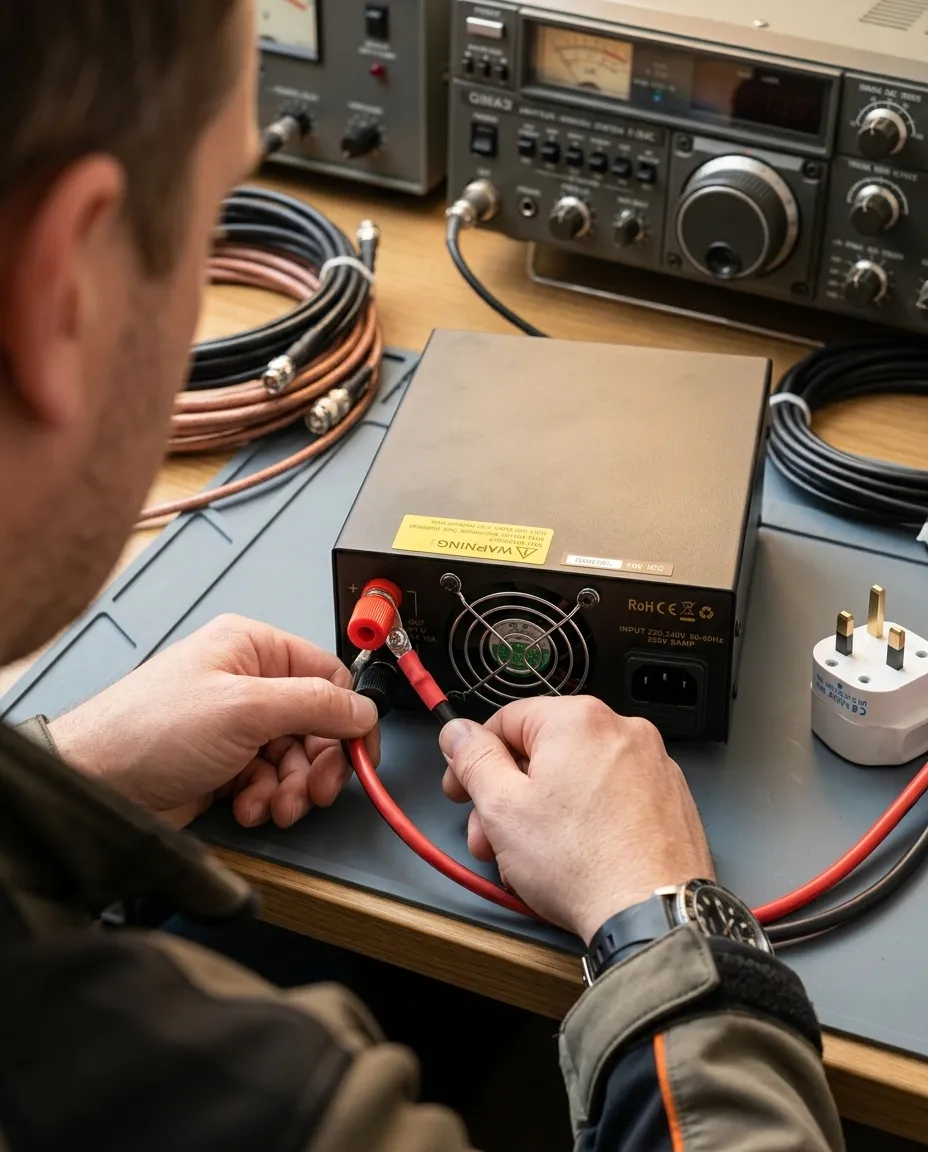
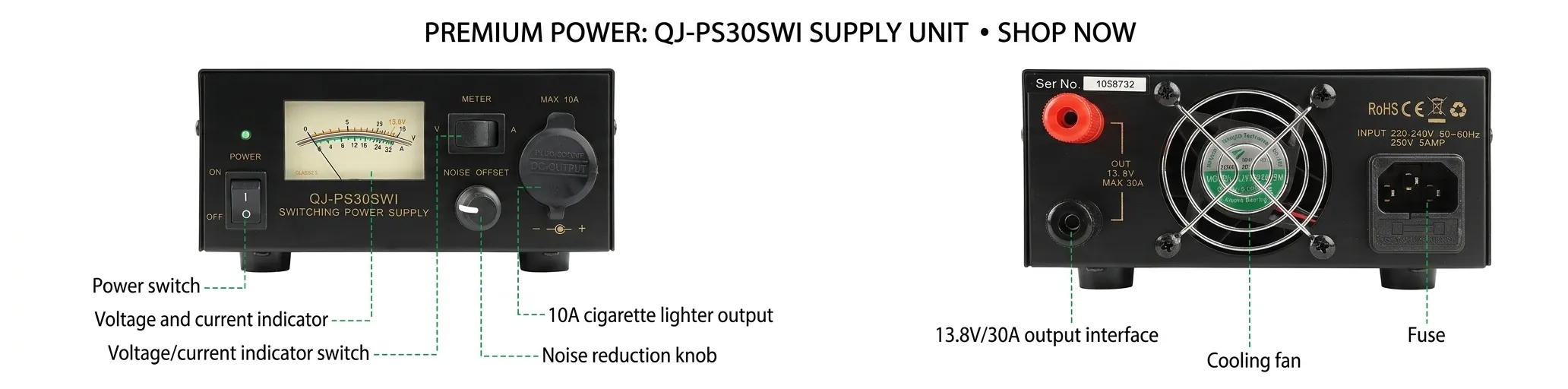
A 13.8V 30A bench power supply UK should offer heavy-duty binding posts (rated 30A minimum), Anderson Powerpole compatibility, and ideally a front-panel cigarette lighter socket (10A rated) for handheld radios and accessories. Multiple output terminals let you run several devices simultaneously without daisy-chaining.
Worth the extra spend? Absolutely. A proper 30 amp 13.8 volt DC power supply UK with decent terminals saves hours of faffing with adapters and reduces voltage drop at the connections.
Browse the range at Jaogau Bench Power, where the models are selected specifically for the UK amateur and professional market.
Key Applications Beyond Radio
Ham radio drives most 13.8V 30A power supply for ham radio searches, but these units serve far broader purposes. I use mine daily for tasks that have nothing to do with RF.
Automotive Electronics Testing
Testing car stereos, amplifiers, LED lighting, and ECU modules on the bench. A stable 13.8V supply simulates a running vehicle's electrical system perfectly. I've diagnosed more car electrical faults on my bench than under a bonnet — much easier when you can control the supply voltage precisely.
CCTV and Security Systems
Powering 12V camera systems during installation and testing. A 30A switch mode power supply 13.8V can run an entire multi-camera system simultaneously for commissioning checks.
RC and Drone Charging
High-current chargers for LiPo batteries need a solid DC source. A 30A supply handles even 6S charging at high rates without breaking a sweat.
LED Lighting Projects
12V LED strips, architectural lighting prototypes, and signage testing. The regulated output prevents colour temperature shifts that occur with voltage variation.
For those needing an AC to DC converter at 13.8V for UK mains, we've put together a dedicated guide covering input voltage considerations for 230V 50Hz supply.
Frequently Asked Questions
Can I use a switch mode power supply for HF ham radio without interference?
Yes, modern units with Noise Offset Control (NOC) technology reduce RF interference by 20–40dB on amateur bands. A quality ham radio power supply 13.8V UK with NOC produces noise floors within 1–2dB of linear equivalents on HF. Always verify the unit carries UKCA/CE EMC certification before purchase.
What's the difference between a 13.8V regulated power supply and an unregulated one?
A 13.8V regulated power supply maintains output within ±0.05–0.1V regardless of load changes, from 0A to full 30A draw. Unregulated supplies can sag 1–2V under heavy load, causing radio transmit power reduction and potential equipment protection trips. Regulated output is essential for transceivers.
How much does a decent 13.8V 30A bench power supply cost in the UK?
In June 2026, expect to pay £55–£130 for a quality 13.8V 30A bench power supply UK switching unit with full protection features and NOC. Linear equivalents at the same rating cost £150–£350. Budget units under £45 typically lack proper EMC filtering and protection circuits — avoid them for radio use.
Is a 30A power supply enough for a 100W HF transceiver?
Yes. A 100W HF transceiver draws approximately 20–22A peak on SSB transmit. A 13.8V 30A power supply for ham radio provides 30–50% headroom above peak demand, preventing voltage sag during key-down. This headroom also extends PSU lifespan by avoiding continuous full-load operation.
Do switch mode power supplies need ventilation space?
Yes — allow minimum 50mm clearance on all ventilated sides. Fan-cooled SMPS units draw air through side or rear vents and exhaust warm air. Blocking airflow triggers over-temperature protection at around 70–85°C internal temperature, shutting the unit down. Enclosed cabinet installations need forced ventilation.
Are switching power supplies safe to use in a home workshop?
Absolutely, provided they carry UKCA marking and meet BS EN 61558 safety standards. Quality units include double insulation, earth bonding, and multiple electronic protections. They're significantly safer than DIY solutions. Always buy from reputable UK suppliers who can provide compliance documentation.
Key Takeaways
- Weight advantage: Switch mode power supplies weigh 1.5–2.5kg versus 8–12kg for equivalent linear units — a 75–80% reduction.
- Efficiency: SMPS delivers 85–92% efficiency compared to 40–55% for linear, meaning less heat and lower electricity costs over time.
- Noise is solved: Modern NOC technology reduces RF interference by 20–40dB, making switching supplies viable for HF ham radio in 2026.
- Price point: A quality 13.8V 30A bench power supply UK costs £55–£130 — roughly half the price of an equivalent linear unit.
- Protection matters: Always verify OVP, OCP, short-circuit, and over-temperature protection are included. Non-negotiable for protecting downstream equipment.
- Compliance: UKCA marking and BS EN 61558 compliance confirm the unit meets UK safety and EMC requirements — don't skip this check.
- Versatility: Beyond radio, these supplies handle automotive testing, CCTV commissioning, RC charging, and LED projects with equal competence.
Ready to try Jaogau Bench Power?
View Jaogau PS-30A — £82.90 · Free UK DeliveryNoise Offset Control · 30A peak · 12-month warranty