DC Bench Power Supply UK: Fixed 13.8V vs Variable Output
A practical UK buyer's guide comparing fixed 13.8V 30A bench PSUs with variable bench top power supply units — covering specs, noise performance, and real-world use for ham radio, CB, automotive testing, and electronics work.
Why You Need a Dedicated DC Bench Power Supply
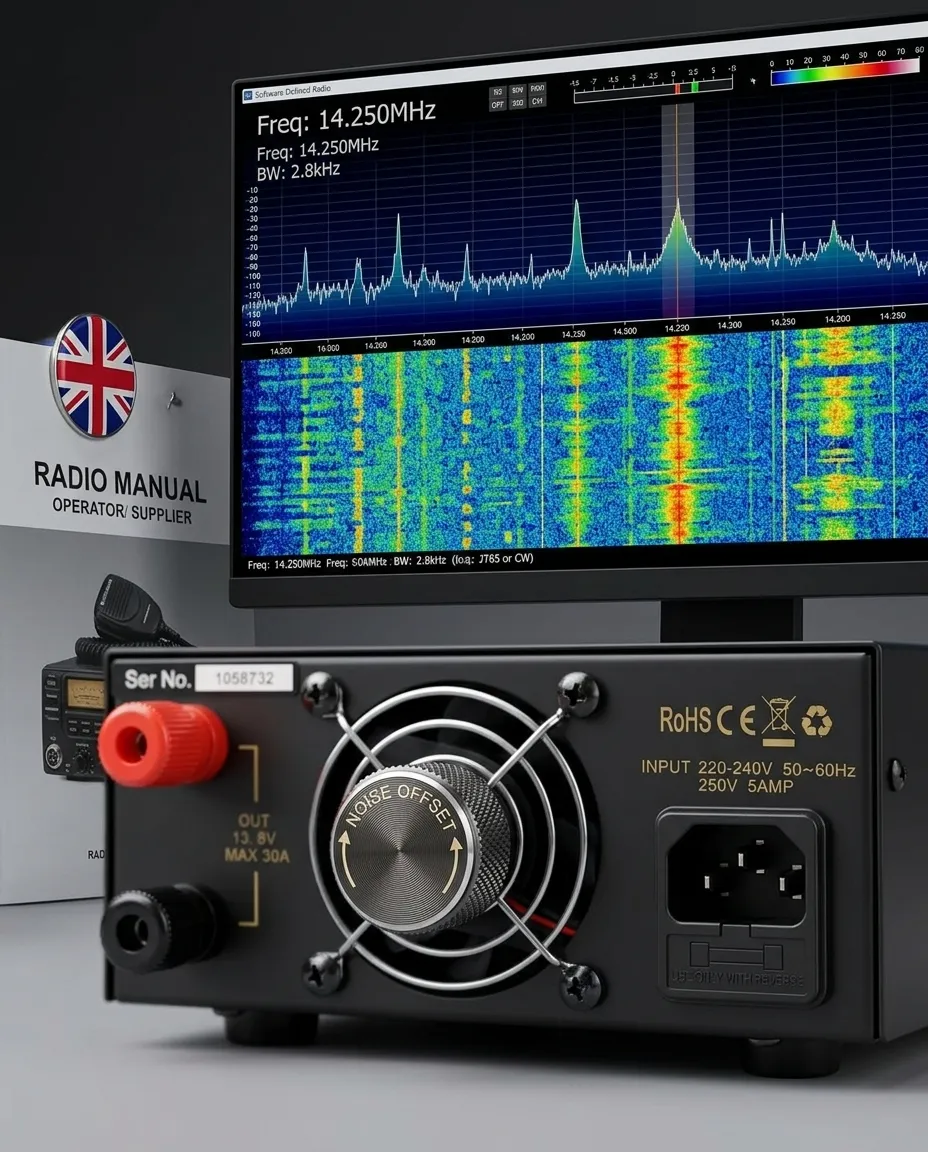
If you are running any kind of electronics bench, whether that is amateur radio gear, SDR monitoring, automotive ECU testing or prototyping circuits, a proper dc bench power supply is essential kit rather than optional. For data-mode and SDR operators especially, a decent regulated supply earns its keep the first time it holds voltage steady through a long, high-duty transmit session instead of letting a sensitive transceiver see a spike.
So what separates a proper bench PSU from a random 12V adapter off Amazon? Three things: regulation accuracy, current capacity, and protection circuits. A quality unit holds its output voltage within ±0.5% regardless of load changes. That matters.
Cheap wall-wart adapters sag under load, produce electrical noise, and offer zero short-circuit protection. A no-name supply that lets a transient through can destroy a £400 transceiver, so it is simply not worth the risk.
Common Applications in the UK
The typical UK buyer looking at bench power supplies falls into a few camps: ham radio operators needing a stable 13.8V regulated power supply for their shack, CB enthusiasts wanting a reliable cb radio power supply 30a rated, automotive electricians testing 12V systems, and electronics hobbyists who need variable voltage for prototyping. Each group has slightly different priorities, but they all need clean, stable DC power.
Fixed 13.8V vs Variable Output: Which Do You Actually Need?
This is the first decision most buyers face, and honestly, it's simpler than people make it. If 90% of your work involves powering 12V nominal equipment — radios, car electronics, LED strips, CB gear — then a fixed 13.8V 30A bench power supply is your best bet. Purpose-built, optimised for that one job, and typically cheaper than an equivalent-rated variable unit.
Variable bench top power supplies shine when you're doing development work. Testing a circuit at 3.3V, then 5V, then 9V? You need adjustable output. But here's the thing — most variable units under £200 max out at 5A or 10A continuous. Getting 30A variable output means spending serious money.
The Case for Fixed 13.8V
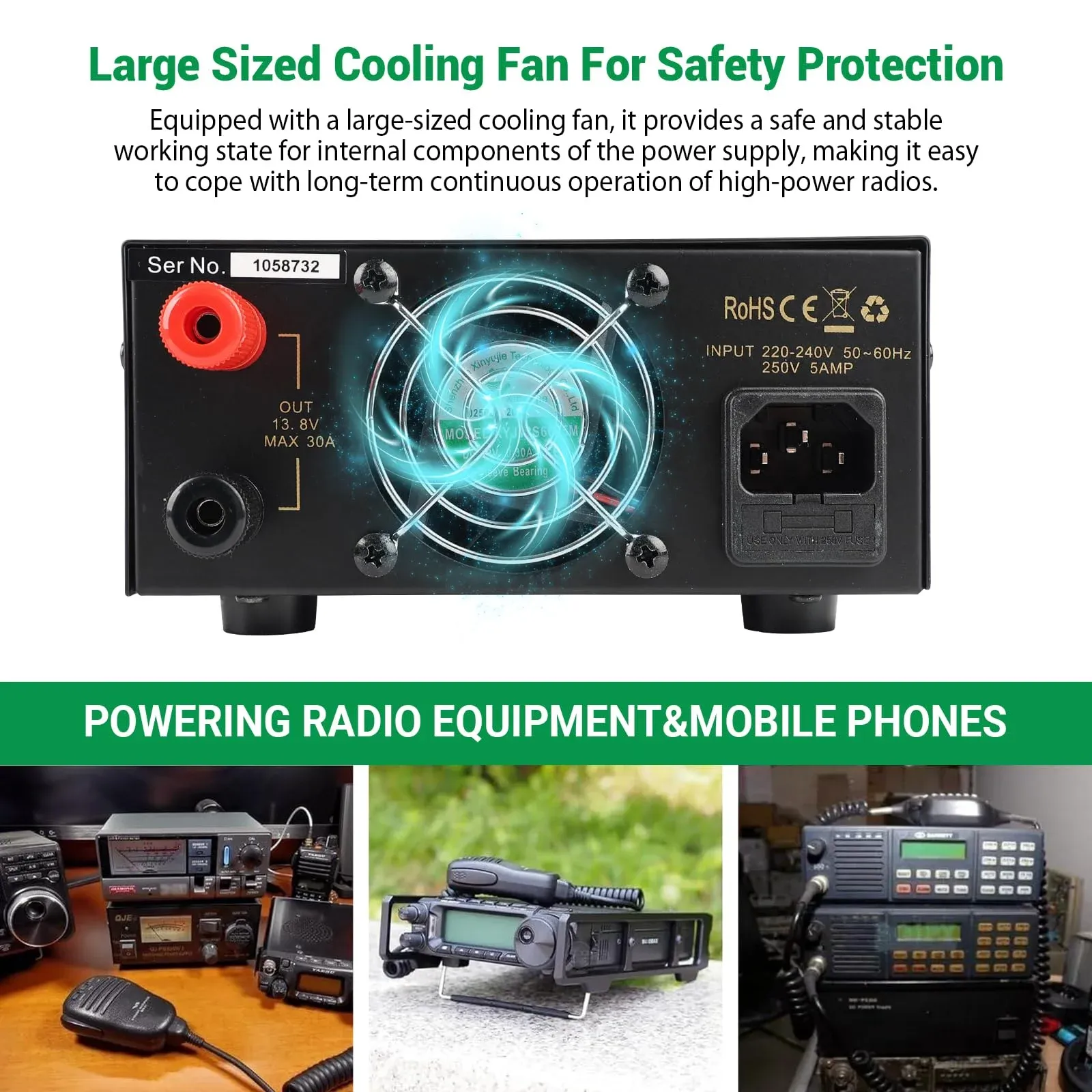
A dedicated 13.8v regulated power supply uk unit gives you exactly what mobile radio equipment expects. That 13.8V figure isn't arbitrary — it matches a car battery's voltage when the alternator is charging. Every ham radio power supply 13.8v rated is designed around this standard. You get maximum current capacity for your money, and the regulation circuitry is optimised for that single output voltage.
The Case for Variable
If you're breadboarding microcontroller projects one day and testing a car stereo the next, variable makes sense. Just be realistic about current requirements. A 30V/10A variable supply gives you flexibility but won't run a 25A-draw HF transceiver at full transmit power. Horses for courses.
The 13.8V 30A Bench Power Supply: What to Look For in the UK
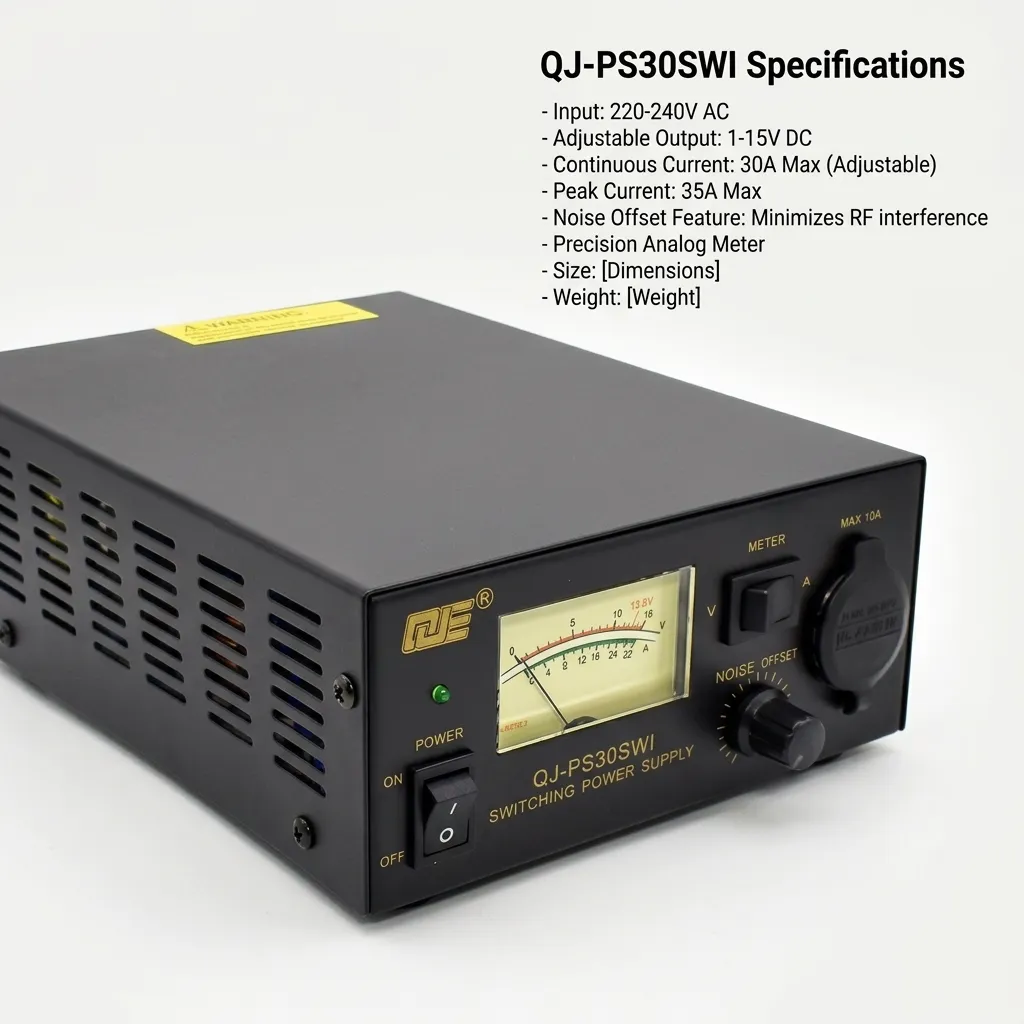
Current ratings are where buyers get caught out, because continuous and peak figures are not the same. A 100W HF rig peaks near 20-22A on transmit but averages far less on SSB or CW, so a unit rated around 20A continuous with a 30A peak, the way the Jaogau PS-30A is specified, handles a 100W station comfortably. Sustained high-duty work such as long FT8 or RTTY sessions sits closer to the continuous figure, so match the rating to how you actually operate.
Key specs for a quality 30A 13.8V unit:
- Output: 13.8V DC, around 20A continuous with 30A peak headroom
- Ripple and noise: below 50mV peak-to-peak (ideally under 30mV)
- Protection: over-voltage, over-current, short-circuit, over-temperature
- Cooling: temperature-controlled fan (quiet at low loads)
- Weight: 2-4kg for switch-mode, 10-15kg for linear
Across UK-available units, the budget options around £45-£65 work fine for basic use but tend to have noisier fans and less precise regulation. Step up to the £90-£130 bracket and you get tighter voltage regulation, better build quality and, critically for radio and SDR work, lower RF noise output.
Front Panel Features That Actually Matter
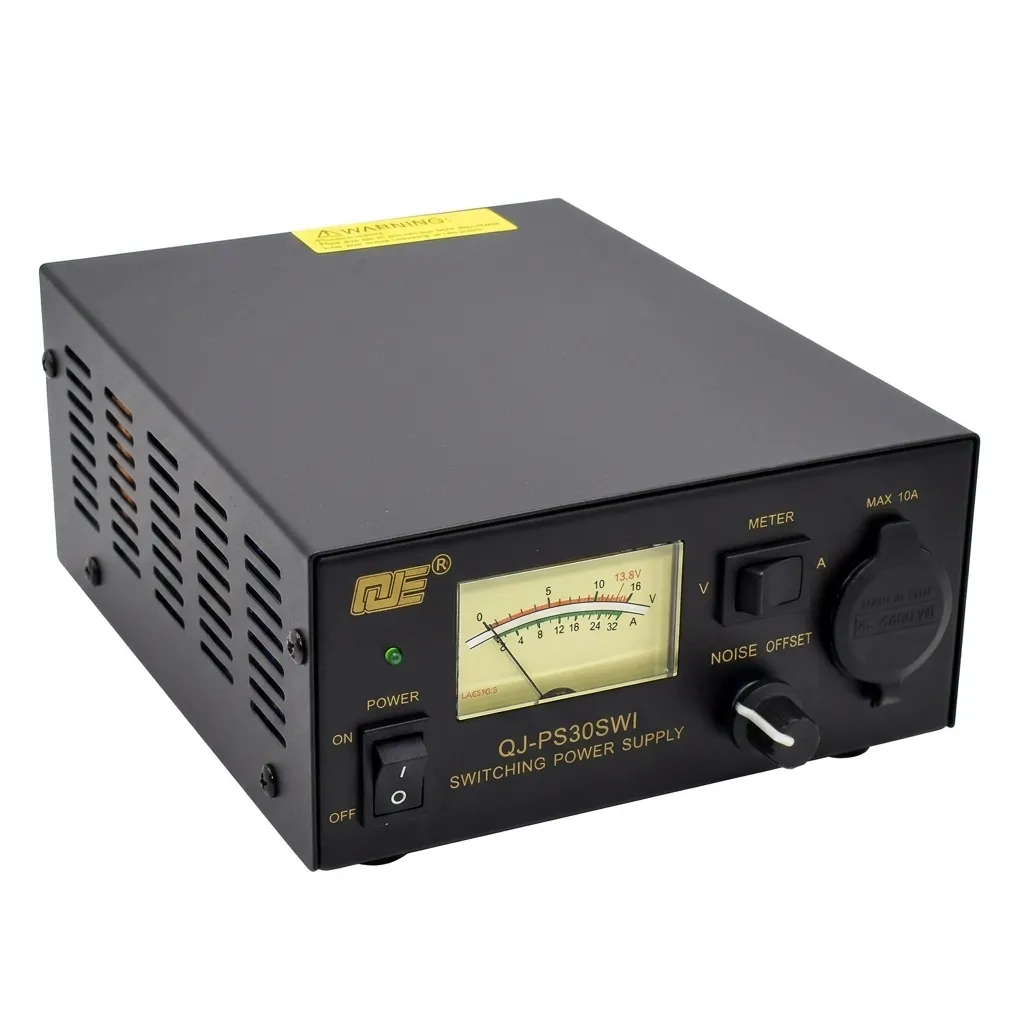
Look for binding posts that accept 4mm banana plugs (standard in the UK), Anderson Powerpole connectors if you're in the ham radio world, and ideally a front-mounted cigarette lighter socket rated at 10A for quick connections. A proper bench psu 13.8v 30a should also have an illuminated voltmeter and ammeter — digital readouts are standard now, but analogue meters still have fans for their instant response. (There's something satisfying about watching a needle swing on transmit, even if it's entirely unnecessary.)
Low Noise Switching Power Supply: Why It Matters for Radio
Here's where things get technical, and where cheap supplies really fall down. A low noise switching power supply is non-negotiable for anyone operating radio equipment. Switch-mode PSUs work by chopping DC at high frequency (typically 50-200kHz), and harmonics from that switching can spray interference right across the HF bands. Absolute nightmare if you're trying to pull weak signals on 40 metres.
The better units — like those designed specifically as a bench power supply for ham radio uk use — incorporate Noise Offset Control. This shifts the switching frequency so its harmonics fall between amateur bands rather than on them. Clever engineering that makes a genuine difference on-air.
Switch-Mode vs Linear: The Eternal Debate
A 30a linear power supply 13.8v is the gold standard for noise performance. Zero switching artefacts. Dead quiet. But they're heavy (12-15kg for a 30A unit), run hot, and cost more. A 30a switch mode power supply 13.8v weighs 2-3kg, runs cooler, and costs less — but needs good EMI filtering to match linear noise performance.
That said, modern switch-mode designs have closed the gap significantly. In 2026, a quality SMPS with proper filtering and noise offset can match a linear supply for most practical radio work. A linear is now really only worth it for weak-signal VHF/UHF work or EMC-sensitive measurements. For a deeper comparison, have a look at our SMPS vs linear PSU guide for radio operators.
The British Standards Institution (BSI) publishes EMC standards (BS EN 55032) that cover emissions from power supplies — worth checking that any unit you buy references compliance with relevant standards.
DC Bench Power Supply UK: Spec Comparison Table
Here's how the main types of dc bench power supply uk options stack up against each other. I've pulled together real specs from units available in spring 2026 to give you a proper side-by-side.
| Feature | Budget SMPS 13.8V 30A | Quality SMPS 13.8V 30A (with Noise Offset) | Linear PSU 13.8V 30A | Variable 30V 10A |
|---|---|---|---|---|
| Typical UK Price | £45–£65 | £90–£130 | £180–£280 | £70–£150 |
| Output Voltage | 13.8V fixed | 13.8V fixed | 13.8V fixed (some adjustable 12-15V) | 0–30V adjustable |
| Max Continuous Current | 30A | 30A | 30A | 10A |
| Ripple/Noise | 50–80mV p-p | 20–35mV p-p | 5–15mV p-p | 30–50mV p-p |
| Weight | 1.8–2.5kg | 2.5–3.5kg | 12–15kg | 2–4kg |
| Noise Offset Control | No | Yes | N/A (no switching noise) | Rarely |
| Cigarette Socket | Sometimes (rear) | Yes (front, 10A rated) | Rarely | No |
| Best For | LED strips, basic 12V loads | Ham radio, CB, automotive | Weak-signal radio, lab work | Electronics prototyping |
The sweet spot for most UK buyers in 2026? That middle column. A quality switch-mode 13.8v 30a bench power supply with noise offset control gives you 90% of linear performance at a third of the weight and half the price. For more on choosing between compact and linear designs, see our linear vs switching PSU comparison.
Buying Guide: What UK Buyers Should Check in 2026
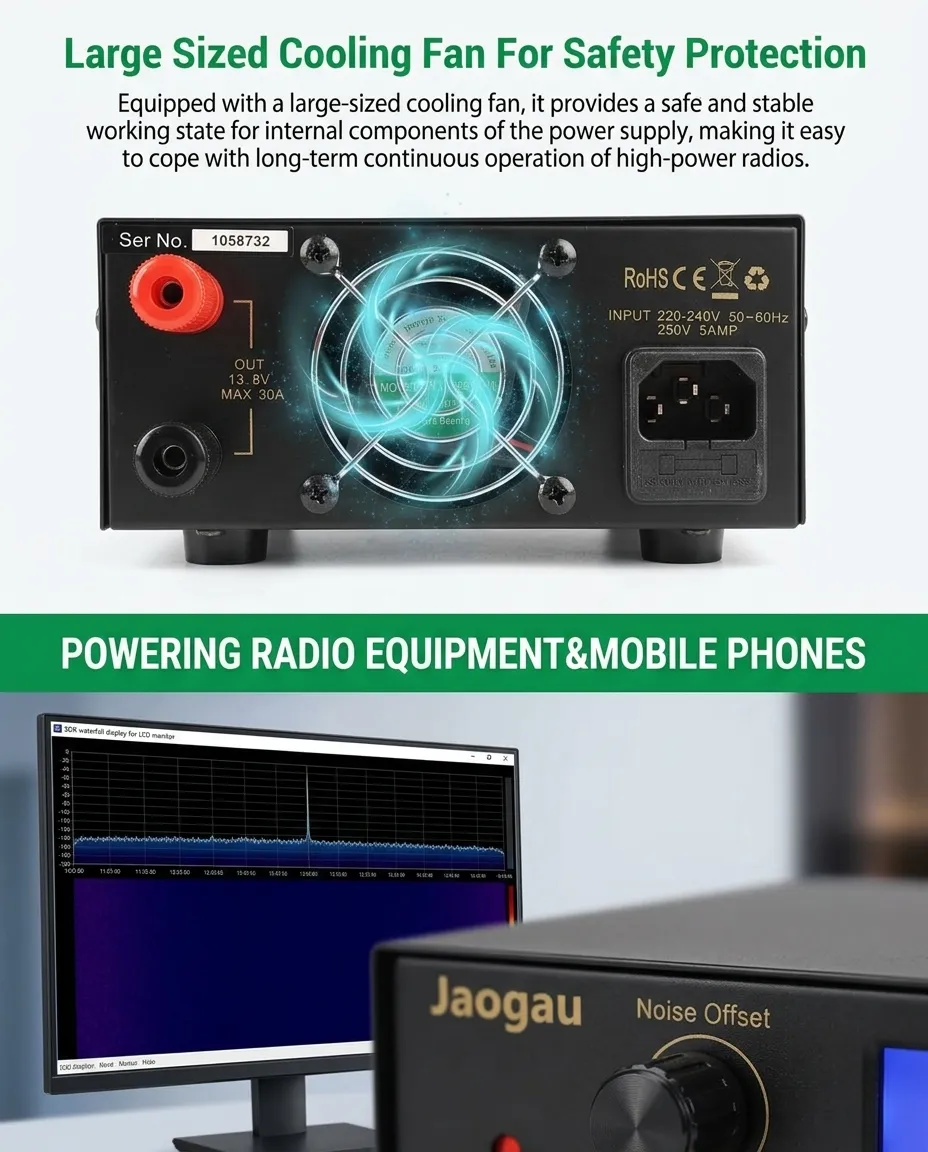
The dc bench power supply uk market has shifted noticeably this spring. Component costs have stabilised after the post-pandemic chaos, and we're seeing better-specced units at lower price points than even 18 months ago. Here's what I'd check before buying.
Safety Certification
Any power supply sold in the UK must carry UKCA marking (or CE if manufactured before 2025 transition deadlines). Check for it. The GOV.UK guidance on product safety covers what markings are legally required. Don't buy unmarked units from marketplace sellers — I've seen some genuinely dangerous builds with undersized wiring and no earth connection.
The Trading Standards website has useful guidance on reporting non-compliant electrical products if you do encounter them.
Voltage Regulation Under Load
A regulated 13.8v dc power supply for radio should hold voltage within ±0.2V from no-load to full 30A draw. Cheaper units might sag to 13.2V or lower at full current — that's a 4% drop that can cause issues with some transceivers. Ask for load regulation specs before buying.
Cooling and Noise
Temperature-controlled fans are standard on decent units now. The fan should be inaudible at loads below 10A and tolerable at full load. Some budget units run the fan at full speed constantly — absolutely maddening in a quiet shack at 2am. I've actually returned a unit for this reason alone.
Connections and Outputs
For a ham radio power supply 13.8v uk setup, you want heavy-gauge output terminals (ideally both binding posts and Anderson Powerpoles), plus that front cigarette socket for handheld chargers. Rear-panel connections are fine for permanent installations, but front access is brilliant for bench work where you're constantly swapping loads.
UK-Specific Considerations
Make sure the unit accepts 230V AC input (not 110V — some imported units are US-spec). Check the mains lead has a proper UK 3-pin plug, not a shaver adapter bodge. And if you're buying for a workplace or shared workshop, ensure it meets relevant HSE electrical safety requirements for portable appliance testing.
For those specifically looking at AC to DC conversion options, our AC to DC converter 13.8V UK guide covers the technical details of mains-to-DC conversion in more depth.
Frequently Asked Questions
What's the difference between a 13.8V regulated power supply and a standard 12V adapter?
A 13.8v regulated power supply maintains precise voltage (±0.2V) under varying loads up to 30A, with built-in protection circuits. Standard 12V adapters typically deliver 1-3A maximum, have poor regulation (voltage drops significantly under load), and lack short-circuit protection. The 13.8V output specifically matches vehicle charging voltage, making it ideal for mobile radio equipment designed to operate from car electrical systems.
Can I use a 13.8V 30A bench power supply for CB radio?
Yes, a 13.8v 30a bench power supply is ideal for CB radio use. Most CB sets draw 5-8A on transmit, well within the 30A capacity. The stable 13.8V output matches what CB radios expect from a vehicle electrical system. Look for a unit with a front-mounted cigarette lighter socket rated at 10A for convenient connection to handheld CB sets and accessories.
Do I need a linear or switch-mode power supply for ham radio?
For most ham radio operators in 2026, a quality switch-mode PSU with Noise Offset Control is sufficient. These units produce 20-35mV ripple and shift switching harmonics away from amateur bands. A 30a linear power supply 13.8v produces under 15mV ripple but weighs 12-15kg and costs £180-£280. Linear is only necessary for weak-signal VHF/UHF work or EMC-sensitive laboratory measurements.
What does Noise Offset Control do on a bench power supply?
Noise Offset Control shifts the switching frequency of an SMPS so that its harmonics fall between amateur radio bands rather than directly on them. This eliminates RF interference across HF, VHF, and UHF frequencies without the weight and cost penalty of a linear supply. It's the single most important feature for any bench power supply for ham radio uk buyers should look for in a switch-mode unit.
How much should I spend on a DC bench power supply in the UK?
Budget £90-£130 for a quality 30 amp 13.8 volt dc power supply uk rated with noise offset control and proper protection circuits. Units below £50 typically have poor regulation, noisy fans, and questionable safety certification. Above £180, you're into linear territory or premium variable supplies. The £90-£130 bracket offers the best balance of performance, features, and value for UK buyers in June 2026.
Is a variable bench power supply better than a fixed 13.8V unit?
Not necessarily — it depends on your use case. A variable supply (typically 0-30V, 0-10A) suits electronics prototyping where you need different voltages. But for powering radio equipment, automotive accessories, or any 12V system at high current, a fixed 13.8V 30A unit delivers three times the current capacity at a similar price point. Buy for your primary use case, not maximum flexibility.
Key Takeaways
- For ham radio and CB use: A dedicated 13.8v 30a bench power supply with Noise Offset Control is the best choice, delivering clean DC power at £90-£130 in the UK market as of 2026.
- Switch-mode vs linear: Modern SMPS units with proper filtering achieve 20-35mV ripple — adequate for all but the most demanding weak-signal work, at one-third the weight of linear equivalents.
- Variable supplies suit prototyping: If you need multiple voltages for development work, go variable — but accept the 10A current limitation at this price point.
- Safety certification is non-negotiable: Only buy UKCA or CE marked units with proper UK mains plugs. Unmarked imports risk equipment damage and personal safety.
- Front-panel cigarette socket: A 10A-rated front socket adds genuine convenience for handheld radios and quick-connect accessories.
- Check load regulation specs: Voltage should hold within ±0.2V from no-load to 30A — anything worse than ±0.5V isn't suitable for sensitive radio equipment.
- Temperature-controlled fans matter: Constant-speed fans are unacceptable for shack use. Insist on thermally managed cooling that stays quiet at typical operating loads below 15A.
Picking the Right DC Bench Power Supply in the UK
Look, I've been through half a dozen bench supplies over the years. Started with a cheap no-name unit that hummed like a transformer substation and ended up with a proper regulated supply that just works, quietly, every single time I switch it on. The difference in my radio reception alone justified the upgrade.
If you're buying your first dc bench power supply uk shops and online retailers stock, my honest advice is this: don't go bottom-shelf, but you don't need to remortgage either. That £90-£130 sweet spot gets you a 13.8v regulated power supply uk buyers can rely on for years. Sorted.
Worth the extra spend over a £45 budget unit? Every single time. Your equipment deserves clean power, and your ears deserve a quiet fan. Visit jaogaubench.co.uk for our full range of tested and reviewed bench power supplies available with UK delivery.
Ready to try Jaogau Bench Power?
View Jaogau PS-30A — £82.90 · Free UK Delivery20A continuous · 30A peak · Noise Offset Control · 12-month warranty