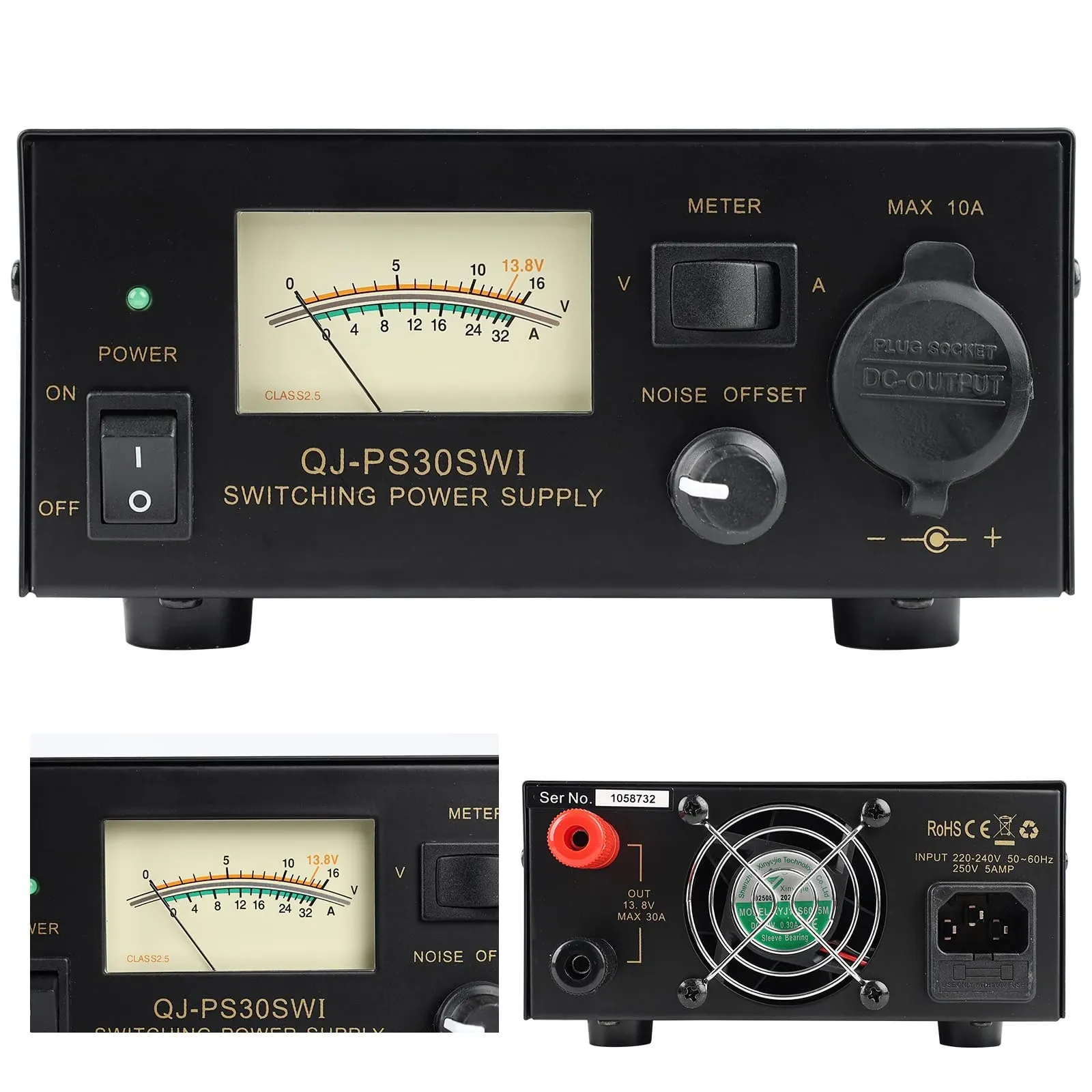
Bench Power Supply UK: A Ham Radio and Workshop Guide
Everything you need to know about choosing a 13.8V 30A bench power supply for amateur radio, CB, and workshop applications — from noise performance to real-world reliability.
What Is a Bench Power Supply and Who Needs One?
A bench power supply converts mains AC voltage into a stable, regulated DC output — typically 13.8V for radio applications. It sits on your workbench (hence the name) and provides clean, consistent power to equipment that would otherwise run off a vehicle battery. Simple as that.
Plenty of UK operators keep one running permanently in the shack, and not only for the radio: the same supply powers test gear, charges batteries and runs 12V accessories. If you are adding a second operating position or fitting out a club station, that versatility is exactly why a dedicated bench supply earns its place.
Who actually needs a dc bench power supply uk buyers typically fall into? Three main groups:
- Amateur radio operators — running HF, VHF, and UHF transceivers from a home shack
- Electronics hobbyists and engineers — testing circuits, prototyping, fault-finding
- Trade professionals — powering 12V tools, automotive diagnostics, CCTV testing
If you're pulling more than a couple of amps from a wall-wart adapter, you probably need a proper bench unit. The cheap plug-in transformers just can't deliver stable voltage under load. A cheap plug-in adapter that sags under load can put a connected transceiver at risk, which is the whole reason a proper bench unit is the safer choice.
Why 13.8V? The Radio Standard That Stuck
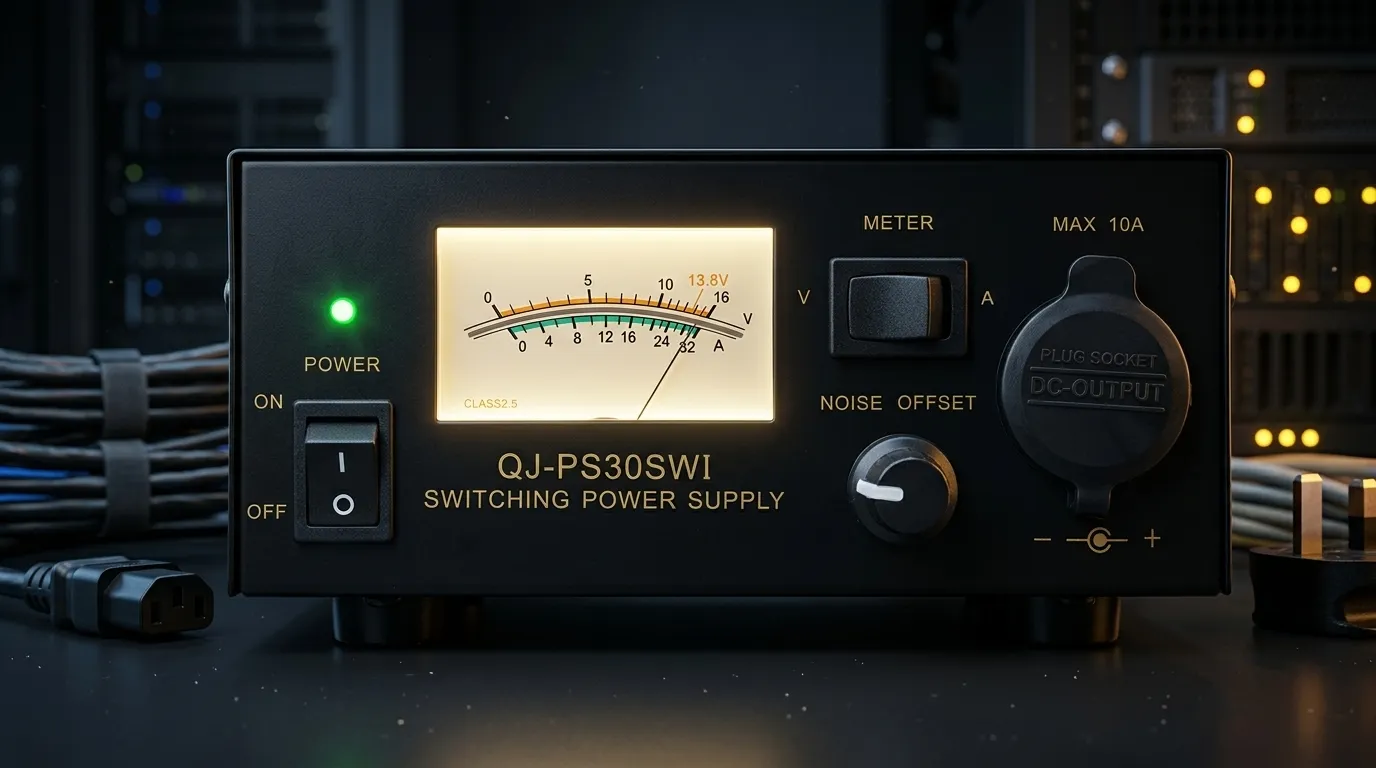
The 13.8V figure isn't arbitrary. It matches the voltage of a fully charged car battery with the engine running — the condition most mobile radios were designed to operate under. Every major transceiver manufacturer specs their equipment for 13.8V DC nominal input.
So why not just use 12V? Under transmit load, voltage sag matters. A 13.8v regulated power supply maintains that precise voltage even when your radio draws peak current during transmission. Drop below 12V and you'll get reduced output power, distorted audio, or the rig simply shutting down.
The Tolerance Window
Most ham radio equipment operates safely between 12.0V and 15.8V. The sweet spot is 13.8V ±0.3V. A decent regulated supply holds this within ±0.1V from no-load to full-load. That's the spec you want to see.
Worth the extra spend over a generic 12V supply? Absolutely. Trying to run a 100W rig such as a Yaesu FT-891 from a laptop charger will never work reliably.
Switching vs Linear PSU: The Debate That Won't Die
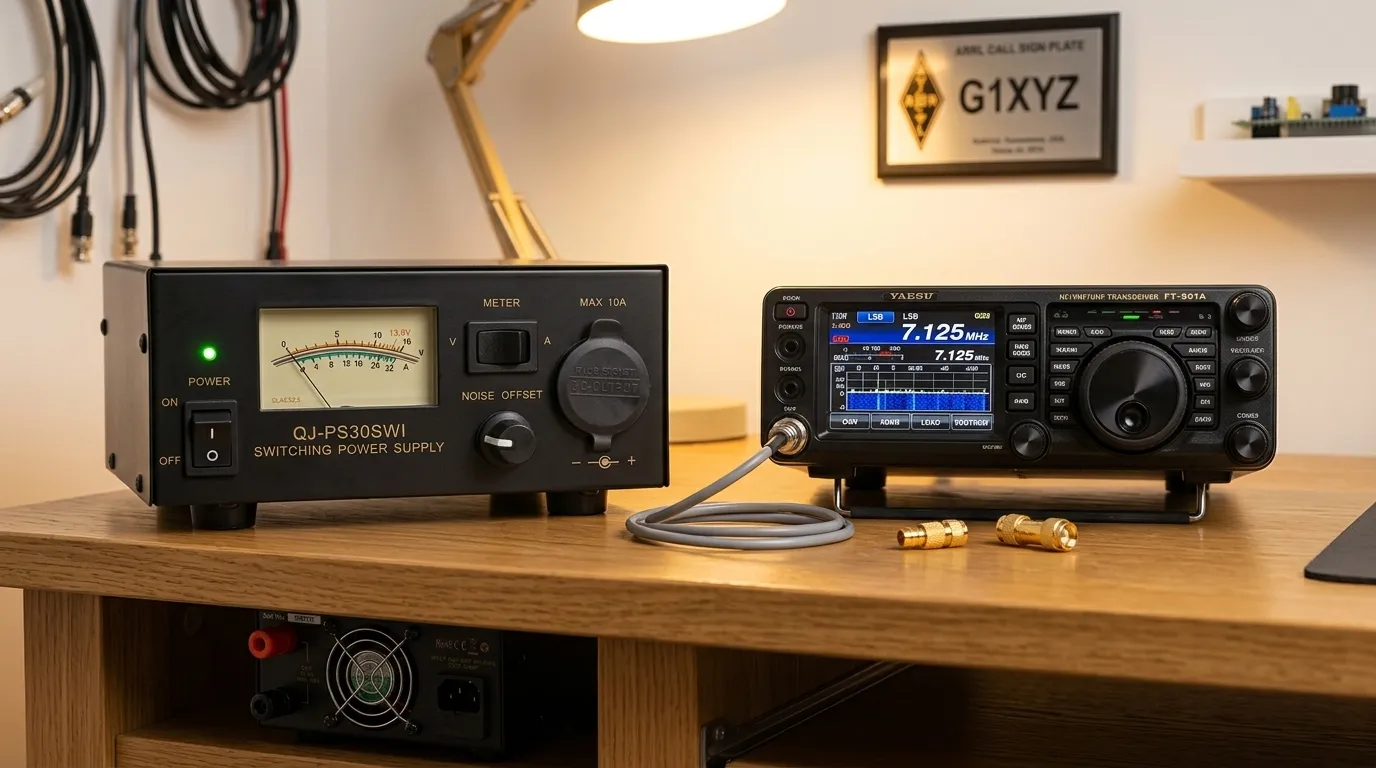
This is where things get interesting — and where I've changed my mind over the years. The choice between a switch-mode power supply (SMPS) and a traditional linear unit affects weight, noise, efficiency, and your wallet.
Linear Power Supplies
A 30a linear power supply 13.8v uses a heavy transformer, rectifier, and series-pass regulator. They're inherently quiet — almost zero RF noise. But they're massive. A 30A linear unit weighs 10-15kg and generates serious heat. An older linear unit can double as a space heater in winter, which is not ideal in a cramped shack.
Switch-Mode (SMPS) Power Supplies
Modern switching supplies convert AC to DC using high-frequency oscillation — typically 50-200kHz. They're lighter (2-4kg for 30A), more efficient (85-92% vs 50-60% for linear), and run cooler. The trade-off? Potential RF interference from the switching frequency and its harmonics.
That trade-off has narrowed significantly in recent years, though. The latest generation of low noise switching power supply units incorporate noise offset control that shifts the switching frequency away from amateur bands. UK operators report that a well-filtered unit from Jaogau Bench Power can produce less interference on 40m than some older linear supplies.
For a deeper comparison, have a look at our SMPS vs linear PSU guide for radio operators.
Key Features in a Quality Bench Power Supply
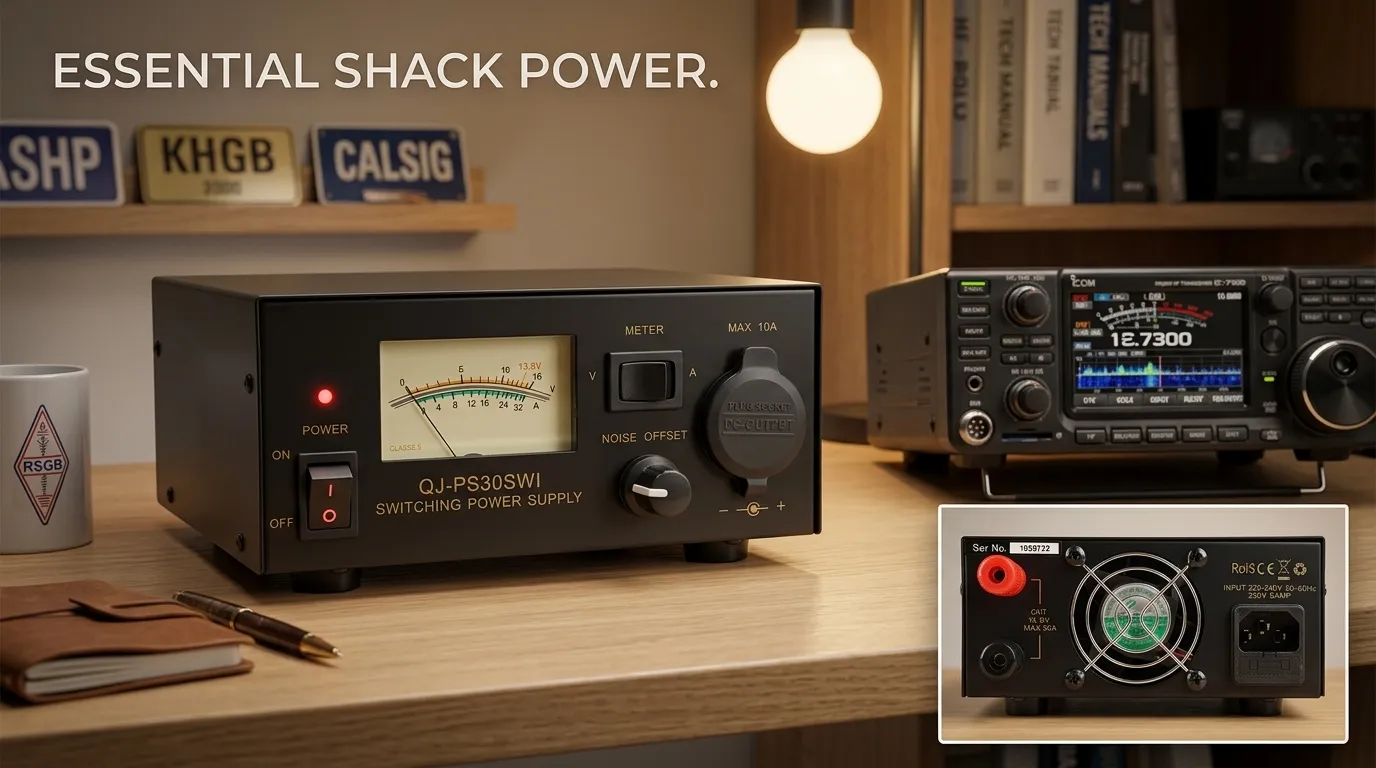
Not all 30A supplies are created equal. Here's what separates a decent unit from one that'll cause you grief.
Voltage Regulation
Look for line regulation better than ±1% and load regulation within ±0.5%. A regulated 13.8v dc power supply for radio should hold voltage steady whether you're drawing 1A on receive or 25A on transmit. Voltage droop under load is the number one complaint with budget units.
Current Capacity
A 13.8v 30a bench power supply gives you headroom. Most 100W HF transceivers draw 20-23A on transmit. Running a 25A supply at 23A continuous is asking for thermal shutdown. The 30A rating gives you that 25-30% margin you need.
Protection Circuits
Non-negotiable features: over-voltage protection (OVP), over-current protection (OCP), short-circuit protection, and thermal shutdown. The Health and Safety Executive guidelines on electrical equipment in workplaces apply here — proper protection isn't optional, it's a legal requirement if you're using this gear commercially.
Front Panel Connections
A 10A cigarette lighter socket on the front panel is genuinely useful. I use mine for handheld radios, portable GPS units, and the occasional phone charger. Binding posts or Anderson Powerpole connectors on the rear handle the main load.
Cooling
Fan noise matters in a radio shack. Temperature-controlled fans that only spin up under load are far better than units running at full blast constantly. Some operators record audio — a screaming fan ruins that. (Ask me how I know.)
Noise, Interference, and Why Offset Control Matters
Here's the thing most product listings don't explain properly. A switching supply generates noise at its fundamental frequency and harmonics. If that fundamental sits at, say, 150kHz, you'll get interference at 150kHz, 300kHz, 450kHz, and so on — right up through the HF bands.
Noise Offset Control shifts the switching frequency so its harmonics fall between amateur bands rather than on them. It's not eliminating the noise — it's moving it somewhere you won't hear it. Clever engineering, that.
Real-World Noise Performance
With offset control engaged, a good ham radio power supply 13.8v unit adds very little to the noise floor on 40m (7MHz) compared with battery power; a poorly filtered supply with no offset can raise it by several decibels. On a crowded band that can be the difference between hearing a weak DX station and missing it entirely.
For HF operators especially, this feature alone justifies choosing a purpose-built bench power supply for ham radio uk over a generic industrial supply. The Jaogau Bench Power units feature this offset control across HF, VHF, and UHF bands — details on their linear vs switching PSU comparison guide.
UK Bench Power Supply Comparison: June 2026
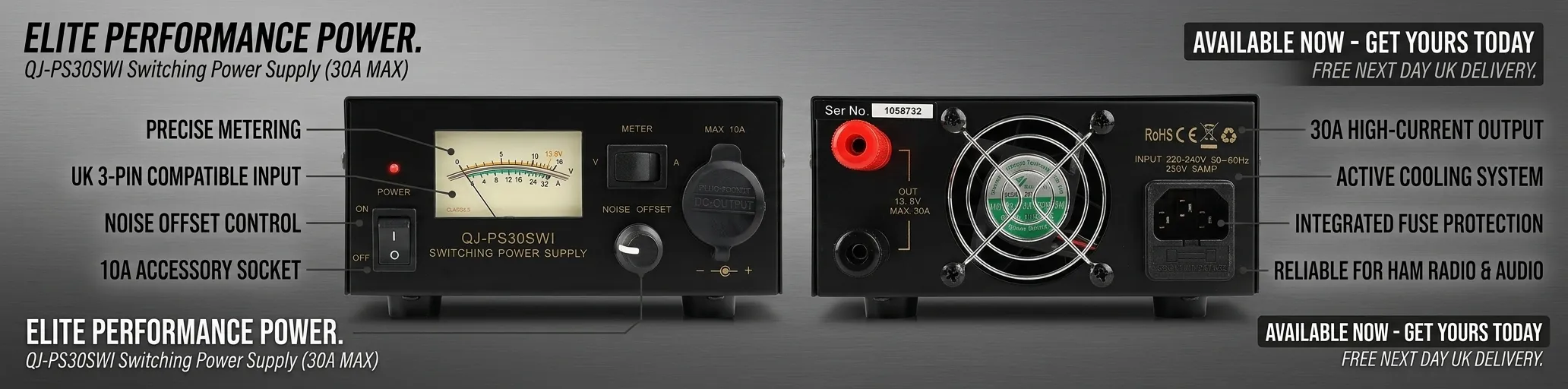
I've pulled together the key specs for popular 13.8v 30a bench power supply uk options currently available. Prices reflect typical UK retail as of spring 2026.
| Feature | Budget SMPS (Generic) | Quality SMPS with Noise Offset | Linear PSU (Traditional) |
|---|---|---|---|
| Output Voltage | 13.8V ±5% | 13.8V ±0.1V | 13.8V ±0.2V |
| Continuous Current | 30A (derated at temp) | 30A continuous | 30A continuous |
| Weight | 2.8kg | 2.5-3.5kg | 12-15kg |
| Noise Offset Control | No | Yes (HF/VHF/UHF) | N/A (inherently low noise) |
| Ripple (full load) | 80-120mV p-p | <30mV p-p | <5mV p-p |
| Efficiency | 82-85% | 88-92% | 50-60% |
| Front Cigarette Socket | Sometimes | Yes (10A rated) | Rarely |
| Protection (OVP/OCP/SCP) | Basic | Full suite | Varies |
| Typical UK Price | £55-£80 | £80-£130 | £200-£350 |
| Best For | Non-critical 12V loads | Ham radio, sensitive electronics | Contest stations, EMC-critical work |
The sweet spot for most operators? A quality SMPS with noise offset control. You get 90% of the noise performance of a linear at a third of the weight and half the price. That's proper bang for your buck.
For those considering the mains conversion side of things, our AC to DC converter guide covers the technical details of what happens inside these units.
Setup, Safety, and Getting the Best Performance
Right, you've bought your supply. Now what? A few things I've learned from running these units daily.
Placement and Ventilation
Keep it away from your antenna feedpoint and receiver. Even a low-noise SMPS radiates something — distance helps. I keep mine on a lower shelf, about 1.5m from my transceiver. Ensure at least 50mm clearance around ventilation slots. Stacking papers on top is a fire risk, not just a performance issue.
Cabling
Use appropriately rated cable. For a 30 amp 13.8 volt dc power supply uk installation, you want minimum 4mm² cable for runs under 1m, or 6mm² for longer runs. Voltage drop over thin cable defeats the purpose of precision regulation. Anderson Powerpole connectors are the amateur radio standard — rated to 30A and foolproof to connect.
Earthing
Connect the PSU chassis earth to your station earth. This isn't just for safety (though it is — check BSI standards for earthing requirements in BS 7671). A proper RF earth reduces common-mode noise pickup significantly. I run a 2.5mm² earth wire from my PSU to a copper earth rod outside the shack.
Common Mistakes
- Daisy-chaining multiple radios off one supply without checking total current draw
- Using the cigarette socket for high-current loads (it's 10A max, not 30A)
- Ignoring the thermal derating — a 30A supply in a 40°C loft might only deliver 22-25A safely
- Running without a fuse between PSU and radio. Always fuse both positive and negative leads
Honestly, I've made most of these mistakes myself over the years. The daisy-chaining one caught me out when I added a second rig and couldn't figure out why both were resetting on transmit. Sorted it with a proper distribution panel.
Frequently Asked Questions
What's the difference between a bench PSU and a regular 12V power supply?
A bench psu 13.8v 30a provides tighter voltage regulation (±0.1V vs ±5%), higher current capacity, and protection circuits specifically designed for continuous operation. Regular 12V adapters typically deliver 12.0V at 2-5A with poor load regulation, making them unsuitable for radio transceivers that need 13.8V at up to 23A during transmission.
Can I use a 13.8V 30A power supply for ham radio on all bands?
Yes, a quality 13.8v 30a power supply for ham radio with noise offset control works across HF, VHF, and UHF bands. The offset control shifts switching harmonics between amateur allocations. Without this feature, you may experience interference on HF bands — particularly 160m and 80m where switching harmonics are strongest.
How heavy is a 30A switch mode power supply compared to linear?
A 30a switch mode power supply 13.8v typically weighs 2.8-3.5kg, while an equivalent linear supply weighs 10-15kg. The weight difference comes from the transformer — linear units use a large 50Hz mains transformer, while SMPS units use a small ferrite-core transformer operating at 100-200kHz. For portable or field operations, the SMPS wins decisively.
Is a 13.8V regulated power supply safe to leave running continuously?
A properly designed 13.8v regulated power supply uk unit with thermal protection can run 24/7 safely. Ensure adequate ventilation — 50mm minimum clearance around vents — and don't exceed 80% of rated current for continuous duty. Quality units include thermal shutdown that activates at 70-85°C internal temperature, preventing damage if airflow is restricted.
Do I need a bench power supply if I only use VHF/UHF?
VHF/UHF transceivers are less sensitive to PSU noise than HF rigs, but you still need stable 13.8V at sufficient current. A 50W VHF mobile draws 10-12A on transmit. A ham radio power supply 13.8v uk rated unit ensures clean power delivery and protects your equipment from voltage spikes, brownouts, and short circuits that a basic adapter won't handle.
What does the cigarette lighter socket on the front panel do?
The front-panel cigarette plug socket provides a convenient 10A-rated 12V output for accessories — handheld radio chargers, GPS units, LED work lights, or phone chargers. It's separate from the main rear terminals and typically fused independently. Don't use it for your main transceiver; it's designed for lighter loads up to 120W maximum.
Key Takeaways
- 13.8V is the standard — it matches vehicle charging voltage and is what every amateur radio transceiver expects to see at its power input.
- 30A gives essential headroom — most 100W HF rigs draw 20-23A peak, so a 30A supply provides the 25-30% safety margin needed for reliable continuous operation.
- Noise offset control is the key differentiator — it shifts SMPS switching harmonics away from amateur bands, giving near-linear noise performance at a fraction of the weight and cost.
- Weight difference is dramatic — around 2.5-3.5kg for a typical SMPS (the Jaogau PS-30A is just 1.5kg) vs 12-15kg for a linear supply of the same rating. Portability sorted.
- Protection circuits are non-negotiable — OVP, OCP, short-circuit, and thermal shutdown protect both the supply and your connected equipment.
- Proper cabling matters — use 4mm² minimum for short runs, 6mm² for longer distances, and always fuse both leads.
- Good value in 2026 sits around £80-£130 — a radio-grade SMPS with full protection and noise control, with the Jaogau PS-30A at £82.90; generic units cost £55-£80 and linear supplies £200+.
Final Thoughts on Choosing Your Bench Power Supply
Look, I know there's a lot to take in here. But the decision really comes down to this: are you powering sensitive radio equipment, or just running a few 12V accessories?
If it's radio — especially HF — get a purpose-built bench power supply with noise offset control. The £30-£50 premium over a generic unit pays for itself the first time you're chasing a weak signal on 20m and your noise floor is 6dB lower than it would be otherwise. That said, if you're only running VHF FM or powering non-radio loads, a decent generic SMPS will do the job fine.
My experience running a 13.8v 30a bench power supply daily for the past few years? Buy once, buy right. The cheap ones work until they don't — usually at the worst possible moment, like mid-contest on a Sunday afternoon. A quality unit from a specialist supplier like Jaogau Bench Power gives you the regulation, protection, and noise performance that radio gear demands.
Whatever you choose, check it meets UK Trading Standards requirements and carries appropriate CE/UKCA marking. Your equipment — and your ears — will thank you.
Ready to try Jaogau Bench Power?
View Jaogau PS-30A — £82.90 · Free UK Delivery30-day free returns · 12-month warranty · Noise Offset Control for HF/VHF/UHF